


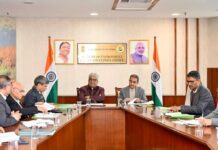









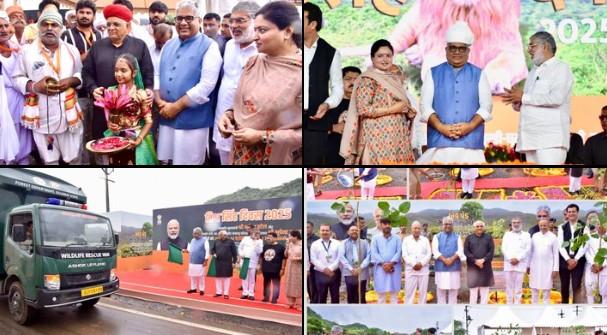
AUG 10: Gujarat celebrated World Lion Day 2025 with a grand event at Barda Wildlife Sanctuary, Devbhumi Dwarka district, showcasing India’s achievements in Asiatic lion conservation. Union Minister for Environment, Forest and Climate Change Shri Bhupender Yadav and Gujarat Chief Minister Shri Bhupendra Patel presided over the ceremony, joined by state ministers, MPs, MLAs, and conservationists.
Union Minister Yadav hailed the remarkable rise in lion numbers, now at 891—up from 674 in 2020—marking a 32% growth in five years and over 70% in the past decade. Crediting Prime Minister Narendra Modi’s leadership, Yadav highlighted Project Lion, announced on Independence Day 2020, as the driving force behind this conservation success. He praised forest officials, communities, and wildlife lovers for their dedication and reaffirmed the government’s commitment to building a Viksit Bharat where wildlife and humans coexist.
Chief Minister Patel reiterated Gujarat’s pride in being the sole global home of Asiatic lions. He announced a ₹180 crore initiative to enhance lion habitats, veterinary facilities, and eco-tourism infrastructure. Notably, lions have returned to Barda region after 143 years, restoring ecological balance. The sanctuary now houses 17 lions, including 11 cubs, and is poised to become a major ecotourism hub with a planned safari park.
The Barda Wildlife Sanctuary, spanning 192.31 sq. km, lies near the Dwarka–Porbandar–Somnath tourist circuit and holds vast tourism potential. Government initiatives include a National Referral Centre for Wildlife Healthcare in Junagadh and ongoing habitat expansion projects.
World Lion Day celebrations also reached 11 districts of Saurashtra, engaging lakhs of students virtually to promote conservation awareness. Gujarat’s lions now roam freely across 35,000 sq. km in these districts, underlining the success of scientific conservation and community participation.
Leaders expressed confidence that continued efforts under Project Lion will ensure the “roar of the Asiatic lion” remains a lasting symbol of Gujarat’s heritage and India’s ecological strength.