








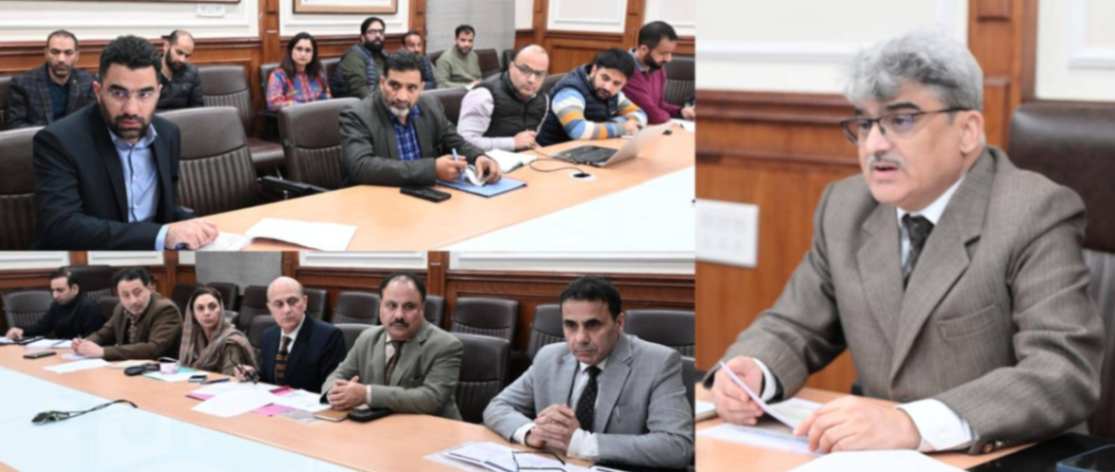
DEC 10: In a major step toward strengthening medical education and healthcare delivery in Jammu and Kashmir, Chief Secretary Atal Dulloo chaired a high-level meeting to review the augmentation of MBBS, postgraduate (PG) and super-speciality seats across Government Medical Colleges (GMCs) and allied medical institutions. The review aimed at accelerating J&K’s long-term goal of improving specialist availability, expanding institutional capacity and aligning state medical infrastructure with national standards.
Fast-Tracking Proposals as NMC Portal Opens
The Chief Secretary directed all medical colleges to fast-track submission of proposals the moment the National Medical Commission (NMC) portal opens for applications. He underlined that delays in proposal submissions often result in missed opportunities for seat enhancement, ultimately affecting student intake and availability of qualified specialists.
Dulloo stressed that medical institutions must remain fully prepared with technical documentation, infrastructure details, faculty strength and compliance requirements beforehand. “Every institution must act swiftly and proactively. Preparedness will ensure J&K secures the maximum possible seat enhancements this year,” he stated.
Focus on Strengthening DM/MCh Super-Speciality Programmes
One of the key priorities highlighted in the meeting was the expansion of DM and MCh super-speciality seats, which play a crucial role in bridging the specialist gap across tertiary care institutions. The Chief Secretary urged colleges to focus on upgrading super-speciality departments, enhancing diagnostic facilities, improving bed strength and addressing faculty shortages.
He noted that strengthening DM/MCh programmes would not only uplift the academic ecosystem but also significantly improve the quality of advanced healthcare services available to citizens.
H&ME Department Briefs on Last Year’s Expansion
Officials from the Health & Medical Education (H&ME) Department provided a detailed presentation on last year’s achievements. The department reported a significant increase in MBBS and PG seats, attributing the growth to systematic planning, timely proposal submissions and infrastructural upgradation across various GMCs.
They further highlighted that several expansion projects—ranging from new hostels to upgraded laboratories and improved faculty recruitment—have already been completed or are in advanced stages.
Upcoming Expansion Plans to Boost Healthcare Capacity
The meeting also discussed upcoming expansion plans, which include:
-
Increasing MBBS intake in select GMCs
-
Adding PG seats in high-demand clinical specialities
-
Submitting fresh proposals for super-speciality courses
-
Strengthening associated hospitals for improved teaching and patient care
-
Enhancing diagnostic and emergency care infrastructure
The Chief Secretary stated that augmentation of medical seats aligns with J&K’s broader vision of creating an equitable, modernised healthcare system capable of meeting growing patient demands and reducing referrals outside the region.
A Vision for Stronger Medical Education
Reiterating the administration’s commitment, Dulloo emphasized the need for seamless coordination between colleges, the H&ME Department and regulatory bodies. He noted that increasing seat capacity directly impacts student opportunities, specialist availability and healthcare access for lakhs of residents.
He called upon institutions to maintain compliance with NMC norms, improve documentation quality and ensure infrastructure readiness well before inspections. “Jammu and Kashmir must position itself as a leading centre of medical education in the region,” he said.
Conclusion
With renewed focus on timely action, infrastructure expansion and super-speciality strengthening, the review meeting sets the stage for significant enhancement in medical education capacity across Jammu and Kashmir. The administration aims to ensure that the upcoming cycle of NMC approvals becomes a milestone year for the UT’s healthcare and academic growth.