
















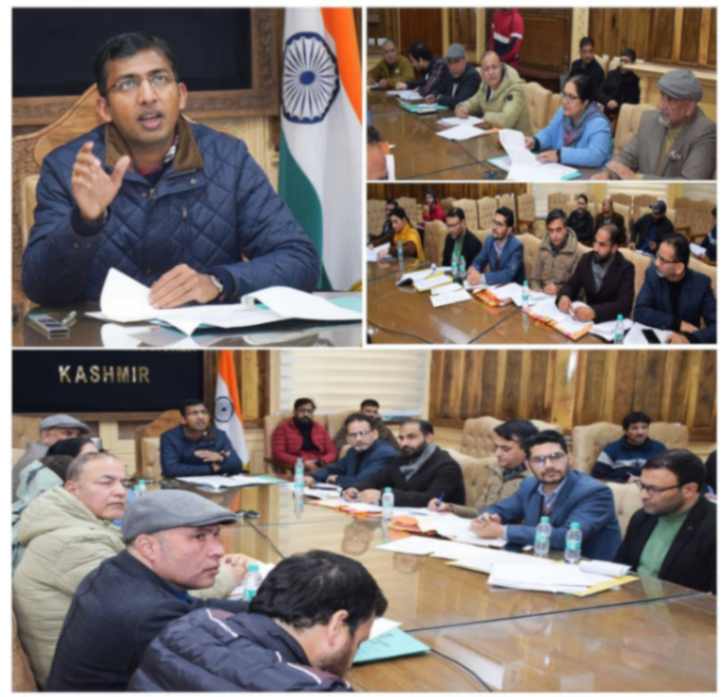
DEC 10: In an important step toward strengthening public safety and aligning with the latest Supreme Court directions, Divisional Commissioner Kashmir, Anshul Garg, conducted a detailed review of Action Taken Reports (ATRs) on stray animal management. The meeting brought together senior officials from municipal bodies, district administrations, health departments and animal welfare agencies to evaluate existing measures and introduce immediate corrective actions.
During the review, the Divisional Commissioner stressed that stray animal management is not merely an administrative function but a vital public health priority, crucial for safeguarding citizens, especially children and elderly populations living in vulnerable localities.
SPCAs to Be Constituted Across Districts
A key directive from the meeting was the mandatory constitution of Society for Prevention of Cruelty to Animals (SPCAs) in every district. Garg emphasized that these bodies must function proactively, ensuring humane management of stray animals and monitoring the implementation of Supreme Court guidelines. Their role will include overseeing shelter operations, sterilization drives, rescue services and welfare mechanisms.
Departments Directed to Strengthen Fencing and Nodal Coordination
To reduce high-risk encounters between humans and stray animals, the Divisional Commissioner called for enhanced fencing around vulnerable spots, including schools, parks, hospitals and residential clusters. Departments were instructed to nominate dedicated nodal officers to ensure day-to-day oversight, timely reporting and improved inter-departmental coordination.
He noted that fragmented communication between agencies often delays action and contributes to repeated incidents. “A seamless coordination mechanism is essential to ensure quick, effective responses,” he said.
Robust IEC Campaigns on Dog-Bite First Aid
Recognising the rising number of dog-bite cases, Garg directed the initiation of Information, Education and Communication (IEC) campaigns across urban and rural areas. These campaigns will focus on:
-
Immediate first-aid steps after a dog bite
-
Importance of timely reporting to nearest health facilities
-
Awareness on availability of vaccines
-
Community participation in reducing stray interaction risks
Public awareness, he said, is critical to reducing panic and preventing medical complications resulting from delayed treatment.
Ensuring Availability of Anti-Rabies Vaccines
Health authorities were instructed to ensure round-the-clock availability of Anti-Rabies Vaccines (ARV) and immunoglobulins in all district hospitals and primary health centres. The Divisional Commissioner warned that stock-out situations will not be tolerated, as access to ARV is a life-saving necessity, not an optional provision.
Identification of Land for ABC Centres a Top Priority
To implement long-term, humane solutions, the meeting highlighted the need to speed up identification of land for Animal Birth Control (ABC) centres. Garg emphasised that sterilization remains the most effective approach to controlling stray animal populations in the long run.
Municipal bodies were directed to submit land proposals within a fixed timeline, failing which administrative action may follow. The DivCom reiterated that delay in establishing ABC centres directly impacts community safety and public health.
Regulating Waste Dumps to Minimise Stray Attraction
Another major focus of the meeting was waste management, a critical factor influencing stray animal behaviour. The Commissioner instructed urban local bodies to:
-
Regulate open waste dumps
-
Ensure timely garbage collection
-
Cover landfill sites
-
Prevent accumulation of food waste in marketplaces
Unregulated waste, he noted, is the biggest pull factor for stray dogs and cattle, and managing it effectively will significantly reduce stray concentration in residential areas.
A Coordinated Push for Public Safety
With clear directions issued to all departments, the Divisional Commissioner reaffirmed the administration’s commitment to developing a structured, humane and safety-oriented stray animal management system in Kashmir. The review marks an important step toward reducing incidents, promoting public awareness and creating a cleaner, safer environment for citizens.