

















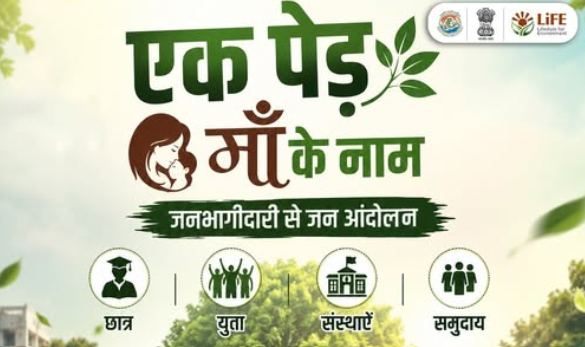
6 June: The nationwide ‘Ek Ped Maa Ke Naam’ campaign is gaining momentum as it encourages citizens to plant and nurture trees in honour of their mothers while placing special emphasis on native and locally adapted plant species.
Environmental experts and officials associated with the initiative believe that prioritizing indigenous tree species not only improves the survival rate of saplings but also contributes significantly to the restoration and protection of local ecosystems.
The campaign, which combines environmental conservation with a social message, encourages individuals, institutions, and communities to participate in large-scale plantation drives. Unlike conventional plantation efforts that often focus on the number of saplings planted, the initiative highlights the importance of selecting species that are naturally suited to local climatic and soil conditions.
Experts point out that native plants require less maintenance, adapt more easily to local environments, and are more resilient to weather variations. As a result, they have a higher likelihood of surviving and growing into mature trees compared to non-native species.
The use of indigenous trees also benefits biodiversity by providing food and habitat for local birds, insects, and wildlife. Native species play a crucial role in maintaining ecological balance and supporting natural pollination processes, which are essential for healthy ecosystems.
Environmentalists have welcomed the campaign’s focus on sustainability, noting that successful afforestation depends not only on planting trees but also on ensuring their long-term survival. By encouraging the use of local species, the initiative aims to create greener landscapes while preserving regional biodiversity.
The campaign has seen participation from educational institutions, government departments, social organizations, and community groups across various parts of the country. Plantation drives under the initiative are often accompanied by awareness programmes highlighting the importance of environmental protection and responsible stewardship of natural resources.
Officials involved in the campaign have stressed that tree plantation remains one of the most effective tools for addressing environmental challenges such as climate change, soil degradation, and declining green cover. Trees help absorb carbon dioxide, improve air quality, conserve water, and support overall ecological health.
The symbolic connection between planting a tree and honouring one’s mother has also resonated with the public, helping to generate wider participation in environmental activities. Organizers believe that this emotional and cultural aspect of the campaign encourages individuals to take long-term responsibility for nurturing the saplings they plant.
As concerns over climate change and environmental degradation continue to grow, initiatives like ‘Ek Ped Maa Ke Naam’ are being viewed as important steps toward building a culture of environmental responsibility and sustainable development.
Experts emphasize that the true success of plantation campaigns lies not merely in the number of trees planted but in ensuring that those trees survive, thrive, and contribute to healthier ecosystems for future generations.
The campaign’s focus on native species reflects a growing recognition that environmental conservation efforts must align with local ecological needs to achieve lasting and meaningful impact.