


















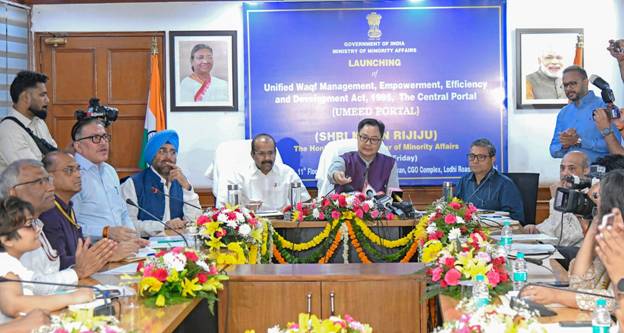
JUNE 06: In a major step toward transparent and efficient management of Waqf assets in India, Union Minister for Minority Affairs and Parliamentary Affairs, Shri Kiren Rijiju, launched the UMEED Central Portal in New Delhi on June 6, 2025. The platform aims to bring Waqf administration into the digital age, enabling real-time updates, verification, and monitoring of properties across the country.
Describing the launch as historic, Shri Rijiju said, “The UMEED Portal will add a new chapter in the history of Waqf property management. It’s not just a digital initiative—it’s a promise of transparency, accountability, and empowerment, especially for poor Muslims, including women and children.”
UMEED stands for Unified Waqf Management, Empowerment, Efficiency and Development and has been developed by the Ministry of Minority Affairs to ensure better utilization and governance of Waqf assets, originally meant to serve the welfare of the Muslim community.
The Minister emphasized that the portal reflects the government’s commitment to protecting minority rights and ensuring Waqf properties are used for their intended social and charitable purposes. He stressed that this digital system will significantly reduce misuse and bring the Waqf administration closer to the people it serves.
Key features of the UMEED Central Portal include:
-
Creation of a digital inventory with geo-tagging of all Waqf properties
-
Online grievance redressal for faster, more transparent complaint resolution
-
Real-time tracking of leasing and usage of Waqf assets
-
GIS integration with other e-governance systems
-
Public access to verified property records and reports
Union Minister of State for Minority Affairs, Shri George Kurian, called the portal a long-awaited reform, saying, “This will ensure each Waqf property is properly documented and utilized for the purpose it was endowed.”
Dr. Chandra Shekhar Kumar, Secretary, Ministry of Minority Affairs, highlighted that the portal would become the digital backbone of Waqf governance, ensuring that assets contribute to vital sectors like education, healthcare, livelihoods, and social welfare, particularly for disadvantaged groups within the Muslim community.
The launch marks a significant leap forward in inclusive governance and community-led development through transparent digital systems.