







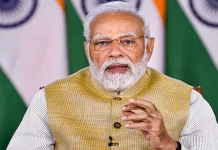











SEP 27:India has announced a landmark step in expanding its medical education infrastructure. On September 24, 2025, the Union Cabinet, chaired by Prime Minister Narendra Modi, approved the creation of 10,023 new medical seats — 5,000 postgraduate and 5,023 undergraduate — in existing government colleges and hospitals. The expansion, with an investment of ₹15,034 crore from 2025-26 to 2028-29, represents a significant move towards the vision of 75,000 additional medical seats in the next five years.
The government will contribute 68.5% of the funding (₹10,303 crore), while states will share the remaining ₹4,731 crore. Each seat will be supported with an average investment of ₹1.5 crore.
Highlighting the importance of this initiative, Prime Minister Modi noted that the new seats will not only boost healthcare access but also enhance medical education infrastructure, ensuring skilled doctors are available across all regions of India.
Targeting Underserved Communities
The expansion particularly addresses the healthcare needs of rural, tribal, and underserved populations. By leveraging existing infrastructure, the scheme promotes equitable distribution of doctors and specialists, helping bridge the urban-rural healthcare divide.
Reforms in Faculty Regulations
To support the growing demand for medical educators, the National Medical Commission (NMC) introduced the Medical Institution (Qualifications of Faculty) Regulations, 2025. These reforms ease eligibility norms for faculty appointments, allowing experienced government specialists to become professors or associate professors without mandatory senior residency. Non-teaching hospitals with 220+ beds can now be recognized as teaching institutions, accelerating the expansion of training facilities.
Strengthening India’s Healthcare Vision
Over the past decade, India has doubled its medical colleges to 808 and expanded undergraduate seats by 141% and postgraduate seats by 144%. With 22 new AIIMS approved under PMSSY, the country has already positioned itself as a leader in medical education.
This latest approval is expected to generate new opportunities for medical students, enhance healthcare accessibility, create direct and indirect jobs, and establish India as a global hub for affordable healthcare.