









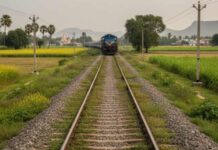







Jammu, Dec 18: In a major boost to operational readiness along the northern borders, the Indian Army has successfully inducted tanks and heavy artillery into the Kashmir Valley using a special military train, marking a significant milestone in strategic mobility. The movement of heavy military equipment from Jammu to Anantnag underscores the growing logistical capabilities enabled by enhanced rail connectivity under the Udhampur–Srinagar–Baramulla Rail Link (USBRL) project.
The induction highlights the Indian Army’s ability to rapidly deploy armoured and artillery assets deep into mountainous terrain, strengthening defence preparedness in the strategically sensitive region. Military officials said the seamless movement of heavy equipment reflects improved coordination between the Army and Indian Railways, particularly the Northern Railway, in supporting national security objectives.
The special military train carried a range of armoured platforms and artillery systems, demonstrating the feasibility of rail-based induction of heavy combat assets into the Valley. This development significantly reduces deployment time compared to traditional road-based movement, which is often affected by weather conditions, terrain challenges and seasonal disruptions.
Defence analysts view the operation as a strategic game-changer, as the USBRL project provides all-weather connectivity to Kashmir, enabling faster mobilisation of forces and equipment. The railway line, which includes some of the most complex engineering structures in the world, has enhanced the Army’s ability to maintain sustained logistics support and operational flexibility in the region.
Officials noted that enhanced mobility directly contributes to operational readiness, deterrence capability and rapid response along the northern borders. The ability to move tanks and artillery by rail ensures efficient force concentration and reduces strain on road infrastructure, while also improving safety and cost-effectiveness.
The induction also reflects the Indian Army’s ongoing focus on modernisation and infrastructure-led preparedness. Improved connectivity allows for quicker rotation of troops, timely supply of equipment and better disaster-response capabilities, in addition to core defence requirements.
The successful movement of military hardware was carried out with close coordination among the Indian Army, Northern Command, and Northern Railway, ensuring adherence to safety protocols and operational secrecy. Officials involved in the operation described it as a demonstration of integrated planning and execution.
With the USBRL project increasingly becoming operational, the Kashmir Valley is now more closely integrated with the national logistics network. This not only strengthens defence preparedness but also has wider implications for economic development, civilian mobility and emergency response.
Security experts believe that such advancements in strategic infrastructure send a strong message about India’s capability to safeguard its borders while maintaining readiness across diverse terrains. The rail-based induction of heavy military assets is expected to become a regular feature of logistics planning in the region.
The operation reaffirms the Indian Army’s commitment to maintaining high levels of preparedness and leveraging infrastructure development to enhance national security, particularly in areas of critical strategic importance.