














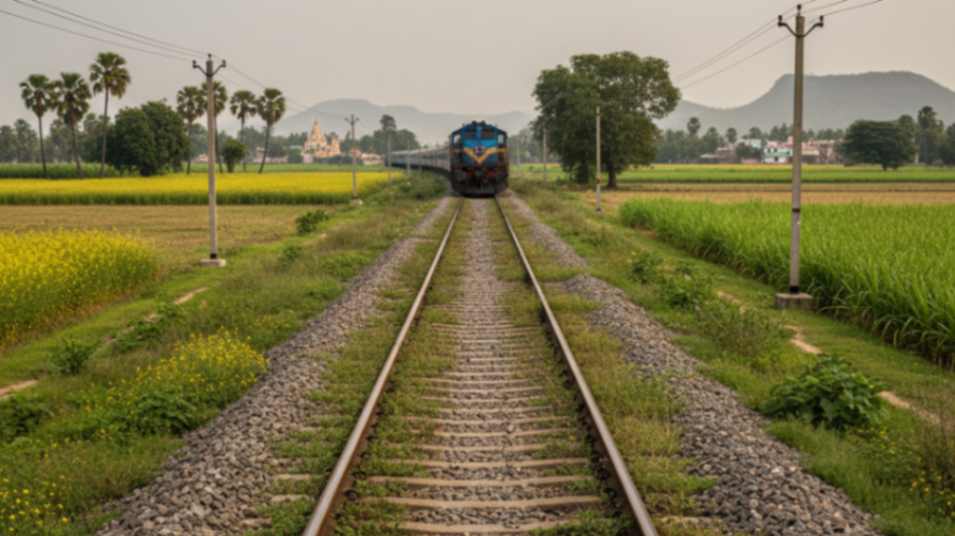
Dec 11 : Indian Railways has accelerated its transition toward green and sustainable mobility with a major push to renewable energy for traction, commissioning 812 MW of solar power and 93 MW of wind power across its network while securing 1,600 MW of round-the-clock (RTC) hybrid renewable energy. The initiative strengthens the Railways’ strategy to become a Net Zero Carbon Emitter by 2030, significantly reducing dependence on conventional energy sources.
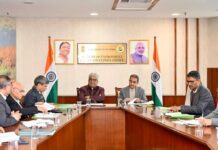
Union Minister for Railways, Information & Broadcasting, and Electronics & IT, Shri Ashwini Vaishnaw, informed the Lok Sabha that Indian Railways is rapidly modernising its traction system by adopting the latest technologies, improving safety, reliability, punctuality, and overall passenger experience.
Electrification Nears Completion: 99.2% BG Network Covered
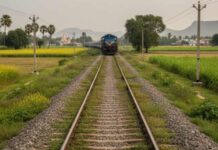
Indian Railways has taken up network electrification in mission mode, achieving 99.2% electrification of the Broad Gauge system. The remaining sections are under rapid execution.
A dramatic expansion in route electrification has taken place over the last decade:
| Period | Route Kilometres Electrified |
|---|---|
| Before 2014 (approx. 60 years) | 21,801 km |
| 2014–2025 | 46,900 km |
The post-2014 achievement more than doubles the previous six decades, marking one of the world’s fastest rail electrification drives.
This shift has drastically reduced the use of coal-based steam engines and diesel locomotives, although steam engines continue to operate on UNESCO-accredited mountain railways and select heritage routes in partnership with IRCTC.
Large-Scale Renewable Energy Deployment for Traction
Indian Railways aims to meet its future traction power requirements predominantly through renewable sources.
Key Renewable Achievements (Till November 2025):
-
812 MW solar power commissioned
-
93 MW wind power commissioned
-
100 MW RTC renewable power supplied through Solar Energy Corporation of India (SECI)
-
1,500 MW RTC hybrid energy tied up, combining solar, wind, and storage systems
This hybrid RTC model ensures a consistent renewable power supply, improving railway operations and enabling reliable, round-the-clock traction support.
The Railways spent ₹29,614 crore on traction in 2023–24, covering all forms of traction energy, underscoring the urgency to transition to cleaner and cost-effective sources.
Energy-Efficient Locomotives With Regenerative Braking
Indian Railways is now manufacturing advanced three-phase IGBT technology locomotives equipped with regenerative braking. These locomotives return energy to the grid during braking, enhancing efficiency and reducing overall consumption.
Hydrogen Train Pilot Project Progressing
To further diversify its clean-energy portfolio, Indian Railways is developing India’s first hydrogen-powered train. Designed under the guidance of the Research, Design & Standards Organisation (RDSO), the pilot project will demonstrate hydrogen propulsion in railway operations. This initiative underscores the Railways’ commitment to exploring advanced green technologies for future transportation.
Driving India Toward Net Zero Rail Transport by 2030
Indian Railways’ long-term strategy includes progressively replacing conventional power with a mix of solar, wind, hybrid, and alternative clean-energy technologies. The initiatives directly contribute to India’s climate commitments and support national goals for sustainability, energy security, and green mobility.
The latest renewable commissioning and RTC hybrid power tie-ups push the Railways closer to achieving its Net Zero Carbon ambition while reducing operational costs and promoting eco-friendly transportation across the country.