

















SEP 10: In a groundbreaking study, researchers from the MACS-Agharkar Research Institute (ARI), Pune, an autonomous institute under the Department of Science & Technology, Government of India, have identified two novel fungal species belonging to Aspergillus section Nigri, commonly known as black aspergilli. The species—Aspergillus dhakephalkarii and Aspergillus patriciawiltshireae—were discovered in soil samples collected from the Western Ghats, one of India’s most ecologically rich and sensitive regions.
The study also marks the first Indian record of Aspergillus aculeatinus and Aspergillus brunneoviolaceus in the region, expanding the known fungal biodiversity of the Ghats.
Employing a polyphasic (integrative) taxonomic approach, the team combined morphological studies with multi-gene molecular phylogenetic analysis using ITS, CaM, BenA, and RPB2 genes. This advanced method—aligned with international best practices—ensured accurate classification of the new species with high statistical support.
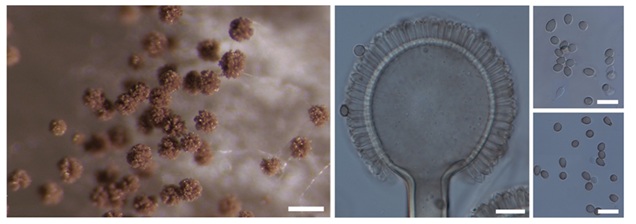
Aspergillus dhakephalkarii is characterized by fast-growing colonies, pale to dark brown conidia, and yellowish-orange sclerotia. In contrast, Aspergillus patriciawiltshireae features abundant sclerotia on multiple media, modest sporulation, and echinulate conidia.
Black aspergilli are industrially important for citric acid production, food fermentation, and agricultural applications. The newly discovered species could hold biotechnological potential, especially in phosphate solubilization—a focus of the ongoing research.
This discovery represents the first Indian-led study using advanced taxonomic tools in this fungal group. Led by Harikrishnan K., Rajesh Kumar K. C., and Ravindra M. Patil, the research highlights the Western Ghats as a rich but underexplored reservoir of fungal diversity. The study was initiated as part of a SERB-funded project and later supported by MACS-ARI core funding.


, Pune, an autonomous institute under the Department)