













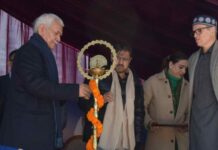

Aug 24: The Health and Medical Education Department of Jammu and Kashmir has initiated its first free HPV (Human Papillomavirus) vaccination programme in Jammu, marking a significant step toward its aim of making the Union Territory cervical cancer-free by 2030.
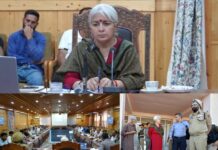
The drive was launched at the State Cancer Institute, Government Medical College (GMC) Jammu, and will gradually expand through schools, Anganwadi centres, and outreach activities in urban slums. The campaign focuses on vaccinating girls between 9 and 15 years of age, considered the most effective age group for developing immunity against HPV infection.
Dr. Bhavna Langer, Nodal Officer for Preventive Oncology, stressed the importance of early protection. She explained that immunization before the onset of sexual activity, particularly between ages 9–11, drastically improves vaccine effectiveness and reduces the risk of persistent HPV infection—the main cause of cervical cancer.
Supporting this, Dr. Ashutosh Gupta, Principal of GMC Jammu, said that cervical cancer continues to be the second most common cancer among women in J&K. He pointed out that HPV strains 16 and 18, known to cause nearly 70% of global cervical cancer cases, are directly targeted by the vaccine, making it a crucial preventive tool.
Recent medical records underline the urgency of this step. The region reported 684 new cervical cancer cases in 2023, a sharp increase from 612 in 2019, reflecting a steady upward trend. Experts believe that without preventive intervention, the burden may rise further in the coming years.
The vaccination campaign has been aligned with India’s commitment to the World Health Organization’s strategy for eliminating cervical cancer as a public health problem. Alongside immunization, health officials are also planning awareness programmes, regular screenings, and community-level sensitization drives to reach rural and underserved populations.
The initiative is expected to play a pivotal role in safeguarding young girls today while reducing the future cancer burden on families and the healthcare system. By ensuring wide-scale coverage, the J&K government aims to set an example for other states and move closer to its target of becoming cervical cancer-free by 2030.
Officials and healthcare experts have emphasized that vaccination, coupled with regular check-ups and lifestyle awareness, could transform J&K into a model state for cancer prevention in India.


 vaccination programme)