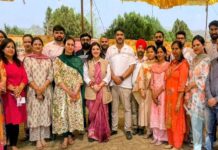













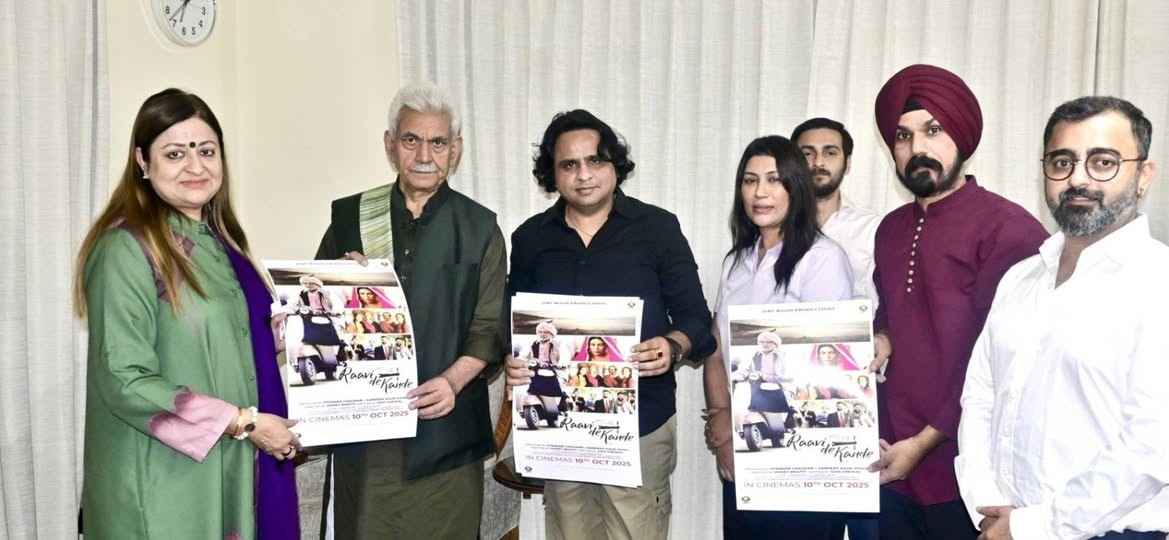
OCT 14:Lieutenant Governor of Jammu and Kashmir, Shri Manoj Sinha, recently met the cast and crew of the much-anticipated Punjabi film ‘Raavi De Kande’, which has been shot across the picturesque locales of Basohli and Katra. The meeting provided an opportunity for the LG to interact with the producers and artists, appreciating their efforts in showcasing the scenic beauty and cultural richness of Jammu and Kashmir through cinema.
During the meeting, Shri Sinha extended his best wishes to the film’s producers, Jitender Chauhan and Sandeep Kaur Sidhu, recognizing their dedication and commitment to bringing a compelling narrative to the screen. The LG also personally greeted the film’s talented cast, including Sandhya Gupta, Sunny, Sajan, and Varun Sharma, praising their performances and the hard work invested in the project.
The Punjabi film industry has increasingly chosen Jammu and Kashmir as a preferred location due to its diverse landscapes and vibrant culture. Films like Raavi De Kande not only bring fresh cinematic content to audiences but also help promote tourism and local employment opportunities in the region. By shooting in Basohli, known for its rich heritage and art, and Katra, a hub for spiritual tourism, the film captures the unique essence of Jammu and Kashmir, potentially attracting viewers from across the country.
Shri Manoj Sinha emphasized the importance of the creative industry in reflecting and promoting the region’s natural beauty and cultural legacy. He highlighted that supporting cinema and cultural projects contributes to a broader narrative of Jammu and Kashmir as a hub for art, tourism, and entertainment. The LG’s engagement with filmmakers signifies a growing encouragement for creative initiatives and collaboration between artists and local communities.
The producers and cast expressed their gratitude to the LG for his encouragement and assured that Raavi De Kande aims to deliver a meaningful story while celebrating the region’s scenic and cultural charm. The meeting concluded with mutual optimism for the film’s success and the hope that such projects continue to strengthen Jammu and Kashmir’s position on India’s cultural map.