


















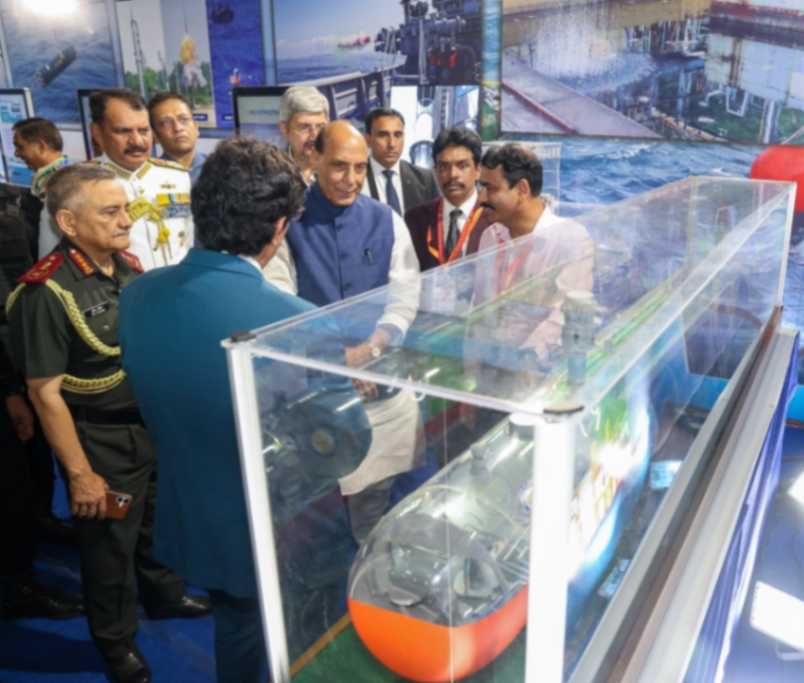
April 4, 2026: In a significant boost to India’s defence research and maritime capabilities, Defence Minister Rajnath Singh laid the foundation stone for a state-of-the-art Large Cavitation Tunnel at the Naval Science and Technological Laboratory. The move marks a major step forward in strengthening indigenous defence technology and enhancing the operational efficiency of the Indian Navy.
What is a Cavitation Tunnel and Why It Matters
A cavitation tunnel is a specialized testing facility used to study the behavior of underwater vehicles, propellers, and hydrodynamic systems under realistic conditions. It helps scientists analyze cavitation, a phenomenon where vapor bubbles form in a liquid due to pressure changes, which can impact the performance, noise levels, and durability of naval platforms.
With this advanced facility, India will be able to conduct high-end testing of submarines, torpedoes, and naval vessels within the country, reducing dependence on foreign testing infrastructure.
Boost to Indigenous Defence Capabilities
Speaking at the event, Defence Minister Rajnath Singh emphasized the importance of self-reliance in defence technology. The new cavitation tunnel aligns with India’s broader vision of Aatmanirbhar Bharat, aiming to develop cutting-edge military systems domestically.
The facility will support the design and development of quieter and more efficient propulsion systems, an essential requirement for modern naval warfare, where stealth plays a critical role.
Strengthening the Indian Navy
The establishment of this tunnel will significantly enhance the research capabilities of the Defence Research and Development Organisation, particularly in the field of underwater technology.
By enabling precise testing and innovation, the facility is expected to:
- Improve the performance and lifespan of naval equipment
- Reduce acoustic signatures for stealth operations
- Accelerate the development of next-generation underwater platforms
A Step Towards Global Competence
Globally, only a few countries possess such advanced testing infrastructure. With this initiative, India joins the league of nations investing heavily in indigenous maritime research and development.
The project also reflects the government’s commitment to building a robust defence ecosystem that not only meets national security needs but also contributes to technological advancement and economic growth.
Conclusion
The foundation of the Large Cavitation Tunnel at the Naval Science and Technological Laboratory is more than just an infrastructure project, it is a symbol of India’s growing confidence in its scientific and defence capabilities.
As the nation continues to invest in innovation and self-reliance, such initiatives will play a crucial role in shaping the future of India’s naval strength and strategic autonomy.