


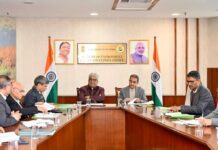










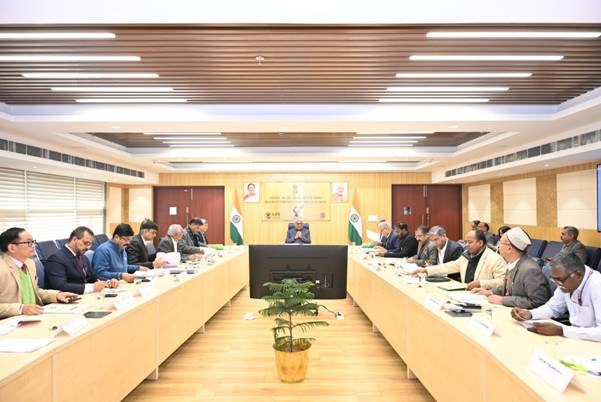
Jan 19: The Union Minister for Environment, Forest and Climate Change, Shri Bhupender Yadav, chaired the 88th meeting of the Standing Committee of the National Board for Wildlife (SC-NBWL) in New Delhi, reaffirming the Government of India’s commitment to balancing development needs with wildlife conservation.
The meeting focused on the consideration of proposals related to public utility and projects of strategic importance, while also undertaking a detailed review of existing policies and processes to ensure effective monitoring and protection of wildlife across the country. The Standing Committee plays a crucial role in evaluating development activities that may have an impact on protected areas, wildlife corridors, and ecologically sensitive regions.
During the deliberations, emphasis was laid on strengthening institutional mechanisms, improving inter-agency coordination, and ensuring that mitigation measures are strictly implemented wherever development projects intersect with wildlife habitats. The Minister underscored the importance of science-based decision-making and transparent procedures to safeguard biodiversity while facilitating essential infrastructure and national interest projects.
The SC-NBWL also reviewed ongoing conservation frameworks and discussed ways to enhance monitoring systems for wildlife protection, including the use of technology and data-driven assessments. The objective is to ensure that conservation efforts are not only compliant with environmental regulations but also aligned with long-term ecological sustainability.
Shri Bhupender Yadav highlighted that wildlife conservation remains a national priority and is integral to India’s broader environmental and climate goals. He noted that protecting forests and wildlife contributes significantly to ecological balance, climate resilience, and sustainable livelihoods for communities dependent on natural resources.
The meeting reiterated the Government’s approach of adopting a holistic view, where development and environmental protection go hand in hand. By carefully examining proposals of public utility and strategic importance, the Standing Committee aims to ensure that economic growth does not come at the cost of irreversible ecological damage.
The 88th SC-NBWL meeting reflects India’s continued efforts to strengthen governance structures related to wildlife conservation, improve policy implementation, and promote responsible development that respects the country’s rich natural heritage.